讲得很棒,赶紧分享给小伙伴
观看地址
《手册》第一部分
专家简介



一、中医所谓的邪气、毒气和新型冠状病毒有什么关系?
1.What is the relationship between COVID-19 and “Pathogenic Qi” or “Toxic Qi” in Chinese Medicine?
中医学把导致疾病发生的因素称之为邪气,而致病性较强的邪气称之为毒气。若此时人体正气不足,正不胜邪,即可产生致病的邪气,重者酿为毒气。如寒毒、湿毒、热毒、清毒、燥毒等名词见于《黄帝内经》。
In Chinese medicine, we refer to factors that cause disease as “pathogenic Qi,” and when these factors are strong or virulent we call them “toxic Qi.” When the “healthy Qi” of the body is insufficient, it will not be able to ward off or defend against pathogenic Qi, and disease will occur. When this is very pronounced and lingers, it develops into “toxic Qi”. For example, Cold Toxin, Damp Toxin, Heat Toxin, Clear Toxin and Dry Toxin are all terms for these external evils that were recorded in the Yellow Emperor’s Inner Canon (1st century BCE).
“毒气”在中医学中还特指具有传染性的一类病因,在中医典籍中被称为“疠气”、“疫毒”等。由疫毒所导致的疾病,也就是“疫病”,或者叫“瘟疫”。
In Chinese medicine, the term “toxic Qi” specifically refers to a category of disease factors that are contagious. It’s called “pestilent Qi,“ “pestilence toxin,” or similar terms in the classical literature of traditional Chinese medicine. The disease caused by pestilence toxin is called “pestilence disease” or “warm pestilence”.
作为传染性致病因素的最早记载。《素问·生气通天论》中称之为”苛毒”,其致病力强、来势凶猛,多具有传染性和流行性。
新冠肺炎发病急、传播迅速、传播范围广,患者大多症状类似,符合中医“疫病”的范畴。新型冠状病毒是本次疫情的传染源,因此,其属于中医“邪气”、“毒气”讨论的范畴。
The earliest record of contagion as a factor that causes disease is found in the Su Wen, “Generating Qi and Connecting with the Heavens Treatise” (Sheng Qi Tongtian Lun), where it’s termed “severe toxin” and is characterized by severe, rapid-onset of disease that is usually infectious and contagious.
COVID-19 is characterised by rapid onset, quick and widespread transmission, and similar initial symptoms in most patients, thus making it easily fit into the category of “pestilent disease” in Chinese medicine. The source of the current epidemic is the novel coronavirus 2019, therefore the virus belongs to the category of “pathogenic Qi” and “toxic Qi.”
二、从中医角度分析,哪些人是新冠肺炎的易感人群?
2. From the point of view of Chinese medicine, which groups are most vulnerable to COVID-19?
新冠肺炎人群普遍易感。被感染的主要是成年人,其中老年人和体弱多病的人似乎更容易被感染。没有证据表明猫狗等宠物可以被感染。从目前的确诊病例中看出,感染患者既有刚出生几天的婴儿,也有孕产妇、高龄老人等。
Since no one has immunity, everyone is vulnerable to contracting COVID-19. However, the middle-aged and elderly, or those who are weak due to disease or constitution, seem to be disproportionately effected. There is no evidence that pets such as dogs and cats can be infected. At this point, we see that infants only a few days old, pregnant women, and the elderly may all potentially contract this virus.
新冠肺炎属于中医“疠气”的范畴,《温疫论·原病》说:“疫者。感天地之疠气……此气之来,无论老少强弱,触之者即病,邪从口鼻而入。”这里又明确指出了疠气病邪可通过空气传染,多从口鼻侵入。
COVID-19 pneumonia belongs to the category of “pestilent Qi” in Chinese medicine. In the Treatise on Warm Pestilence (16th Century CE), the chapter on Disease Origins, states that “Pestilence is contracted from the pestilent Qi of heaven and earth…when this Qi comes, regardless of whether you are young, old, strong or weak, all who come into contact with it will become ill. The evil enters through the nose and mouth.” This text clearly states that pestilence can be spread through the air and can enter through the nose and mouth.
此外,中医认为“正气存内,邪不可干”。老年人脏腑功能减退,精亏血弱,抗御病邪能力下降,是重要的易感人群。久病之人正气损伤,邪气稽留,也是需要重视的易感人群。
In addition, in Chinese medicine, an important tenet from the Yellow Emperor’s Inner Classic is: “When healthy Qi is retained within, evils cannot invade.” In the elderly, the functioning of their zang-fu [organ networks] has already begun to deteriorate, essence is lacking and blood is weak, therefore their ability to fight the evils and disease has diminished, and this is why they are a vulnerable group. People with chronic or long-term illnesses have also suffered damage to their healthy Qi, and pathogenic Qi can therefore easily linger in the body, so they should also be extra cautious.
三、在疫情防控时期,没有患病的人群可以吃哪些中药预防呢?
3. What herbal medicines can people who are not ill take for prevention during the period of epidemic prevention and control?
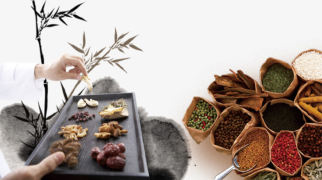
在疫情防控时期,各地根据中医学防疫抗疫的经验,提出了很多中药预防的方案,如湖北省中医院防治新型冠状病毒感染的肺炎一号方:苍术3克,金银花5克,陈皮3克,芦根2克,桑叶2克,生黄芪10克(开水泡,代茶饮,7~10天)。
During this period when we are fighting the spread of the virus, every province has proposed herbal formulas for prevention based on their experiences. For example, Hubei Province has promoted “Formula No. 1 for Novel Coronavirus Pneumonia” and “Formula No. 2 for Novel Coronavirus Pneumonia” for prevention.
Formula No. 1 for Novel Coronavirus Pneumonia
Cang zhu (Rhizoma Atractylodis) 3g;
Jin yin hua (Herba Lonicerae Delavayi) 5g
Chen pi (Pericarpium Citri Reticulatae) 3g;
Lu gen (Rhizoma Phragmitis) 2g
Sang ye (Folium Mori) 2g ;
Sheng Huang Qi ( Astragali Radix) 10g
(Steep with boiling water and drink as a tea for 7-10 days)
防治新型冠状病毒感染的肺炎二号方:生黄芪10克,炒白术10克,防风10克,贯众6克,金银花10克,佩兰10克,陈皮6克(煎服,每日一付,分二次,7~10天)。
Formula No. 2 for Novel Coronavirus Pneumonia
Sheng Huang Qi (Astragali Radix)10g
Chao Bai Zhu (Rhizoma Atractylodis Macrocephalae)10g
Fang feng (Radix Saposhnikoviae) 10g
Guan Zhong (Rhizoma Cyrtomii) 6g
Jin yin hua (Herba Lonicerae Delavayi) 10g
Pei lan (Herba Eupatorii) 10g
Chen Pi (Pericarpium Citri Reticulatae) 6g
(Boil and simmer to make a decoction; one bag is the dosage for one day, but divide into two doses; take for 7-10 days)
四、轻症患者在新型冠状病毒肺炎康复期需要注意哪些问题?
4. What should patients who are recovering from mild COVID-19 pay attention to in the recuperation period?
(一)虚邪贼风,避之有时,注意防护
注意保暖,避免到人群拥挤的地方,尽量远离人多且密闭的环境如超市、商场、生鲜市场等。咳嗽和打喷嚏时请用纸巾或屈肘遮掩口鼻,防止飞沫传播。避免接触新型冠状病毒感染者,饭前便后及触摸污染或疑似污染物后应洗手。
(A)“Empty evils and robber winds must be avoided in a timely way”: Protection and Prevention
Pay attention to keeping the body warm, avoid crowded places, especially closed environments such as supermarkets, shopping malls and fresh markets. When coughing or sneezing, use a tissue or an albow to cover your mouth and nose to prevent transmission through water droplets. Avoid people who are infected and pay extra attention to proper hand washing after eating, after using the toilet, or after coming into contact with potentially infected objects.
(二)起居有常,注意按时作息
注意时作息,避免熬夜,保证睡眠充足;注意室内消毒,开窗通风,保持室内空气流通。
(B)Follow a routine and keep a regular sleeping schedule
We should go to bed at a reasonable time and avoid staying up late, making sure to get enough sleep. Keep the widows open and make sure there is enough air flow.
(三)注意均衡饮食,适度运动,避免长期卧床
中医辨证认为湿邪重是新型冠状病毒肺炎一个重要原因,故饮食宜清淡而富有营养,适当增加新鲜的蔬果,少食或忌食生冷、油炸、熏烤或辛辣、油腻之品;不吃未经检疫的食物,注意生食和熟食的刀具、菜板区分使用。
(C)Maintain a balanced, nutritious diet, exercise appropriately and do not spend too much time lying in bed.
According to Chinese medicine, this is a virus that causes “damp” illness and this is an important disease factor that should be taken into account. Therefore, the diet should be light, with highly-nutritious foods, including fresh fruits and vegetables. Avoid or reduce raw foods or cold and uncooked foods, as well as foods that are greasy, spicy or grilled. Do not eat anything that has not been properly inspected for infectious agents. Pay attention to separating knives and cutting boards for raw and cooked foods.
(四)适当进行体育锻炼,增强体质
可根据身体情况练习太极拳、八段锦、五禽戏、导引养生功十二法等传统功法等,运动量可根据个人具体情况而定,一般每次运动20~30分钟,每日1次。可以通过功法,增加肺功能、降低气道阻力、提高免疫功能、改善运动能力等途径提高呼吸系统疾病患者的活动能力和生活质量。
(D)Exercise to maintain fitness and boost the immune system
Taking your level of fitness into account, you can practice Tai Chi, Eight Pieces of Brocade, Five Animal Frolic, Twelve Daoyin Cultivation Exercises and other traditional forms of internal martial arts. Exercise should be tailored to your level of fitness, generally exercising once a day for 20-30 minutes is appropriate. Using breathing exercises or internal martial arts, you can improve the functioning of the lungs, decrease airway obstructions, and increase immunity. All of these methods can improve mobility and quality of life for people suffering from this disease.
(五)保持积极乐观心态,做好卫生
心平气和,清心勿躁,保持乐观向上良好心态,有助于提高身体免疫力,若有不良情绪,及时寻求心理咨询。
(E)Keep a positive, optimistic attitude and maintain good hygiene.
Remain calm and don’t let yourself get upset. Be optimistic and keep striving to improve. This will increase your immunity. If you are worried or anxious, consult a counselor or psychologist.
(六)如有不适,及时上报
若再次出现发热、咳嗽、胸闷、呼吸困难等不适,应立刻上报,由定点医院收治。
(F)If you feel ill, report it immediately.
If you have fever, cough, stuffiness in your chest, difficulty breathing or other symptoms, report them immediately and go to a designated hospital for treatment if necessary.

