讲得很棒,赶紧分享给小伙伴
观看地址
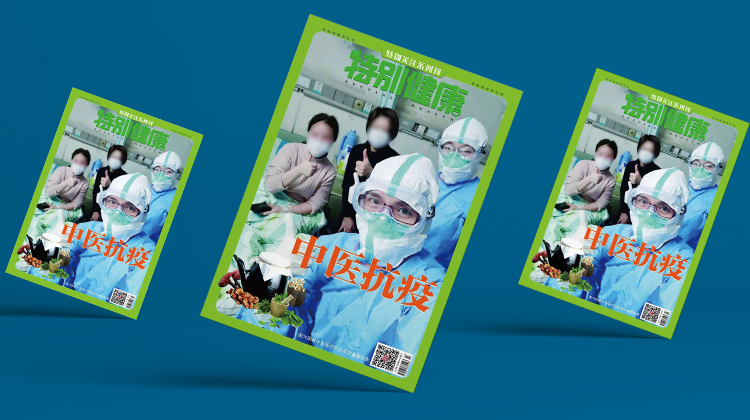
《手册》第二部分
专家简介



五、中医预防传染病有哪些行之有效的措施?
5.What effective measures does Chinese medicine have for prevention?
中医预防传染病的原则包括未病先防、既病防变和已病防传三个方面。中医的预防措施包括:
Prevention in Chinese medicine includes three aspects: treating when signs have emerged but illness has not yet developed, treating illness so that it does not progress into something more serious, and preventing complications or the development of other illnesses. Specific measures are as follows:
(一)一级预防:调摄正气,养生防病
1.锻炼身体以增强体质。
2.顺应四时气候变化:应根据季节的变化和气温的升降,合理安排作息时间、及时调整衣被和室内温度。
3.避免过度消耗正气:《素问·金匮真言论》中提出:“夫精者,身之本也,故藏于精者,春不病温。”除了要避免房劳过度,还要注意日常生活的劳逸结合。
4.注意环境、个人、饮食卫生:居处要空气新鲜、阳光充足、温度适宜,养成良好的个人卫生习惯。
(A) First Stage Prevention: Cultivate and Retain Healthy Qi; Cultivate to Prevent Illnesses
1. Improve your constitution through exercise.
2. Alter your sleep schedule, clothing and the indoor temperature as the seasons change.
3. Avoid expending too much healthy Qi. The Su Wen states: “Essence is the root and foundation of the body, therefore those who store essence will not have warm diseases in spring.” We should avoid excessive sexual activity and also maintain balance in our overall daily lives.
4. Pay attention to environmental, personal and food hygiene. We need fresh air, plenty of sunshine, and an environment with an appropriate temperature. Maintain good personal hygiene.
(二)二级预防:虚邪贼风,避之有时
严格隔离制度:《晋书》指出:“朝臣家有疾,染易三人以上者,身虽无疾,百日不得入宫”说明中医当时不仅认识到隔离的重要性,而且还认识到隔离不仅对病人,而且对病人接触者同样重要。
(B) Second Stage Prevention: “Empty evils and robber winds must be avoided in a timely manner.”
As early as the Book of Jin (4th CE), we see the following record: “When there is illness in the family of a Minister that has been transmitted to more than three people, then even if he is not ill, he may not enter the palace for 100 days.” This shows that in ancient China not only were they aware of the importance of quarantine and isolation, they recognized that it protects both those that are ill and those that are not.
(三)三级预防:预施药物,防止染病
1.熏蒸预防法:此法一般适用于以呼吸道为传播途径的温病预防,如采用苍术、艾叶烟熏剂在室内燃烧烟熏。
2.滴喷预防法:即用药物滴入鼻孔,或喷入咽部。
3.服药预防法:即用一味或多味中药煎服,或制成丸、散剂内服。如预防流感、病毒性肺炎等可选用银花、连翘、野菊花、贯众等。
4.消灭传染源:应用药物来驱虫、杀虫,以防止害虫传染,与病人接触过的物品应严格消毒或者焚烧毁灭。
(C) Third Stage Prevention: Using Herbal Medicines for Prevention
1. Fumigation for Prevention: This method is usually used for airborne diseases that affect the respiratory tract. Use Cang Zhu (rhizoma atractylodis) or Ai Ye (artemesia vulgaris). Burn the herb so that the room is infused with light smoke in order to fumigate and prevent illness.
2. Nasal or Oral Spray: Use appropriate herbs in solution and spray into the nose or mouth.
3. Herbs Taken in Decoction, Pills or Powder Form: Single or multiple herbs are used to prevent flus, viral pneumonia and other illnesses. One can choose Jin Yin Hua (Herba Lonicerae Delavayi), Lian Qiao (Fructus Forsythiae), Ye Ju Hua (Flos Chrysanthemi Indici), or Guan Zhong (Rhizoma Cyrtomii).
4. Eliminating the source of infection: use medicinal substances to ward off or kill insects in order to prevent harmful insects from spreading disease. Anything used in contact with an infected person should be thoroughly disinfected or burned.
与现代医学的免疫方法比较,中医的防疫方法具有广谱免疫效应,普适性强,有前瞻性,处于主动地位,可以避免临时抱佛脚,措手不及。传染病病机演变过程,是邪正相互斗争的过程,正胜则邪却,正虚则邪陷,中医不仅重视“邪气”在发病中的作用,更重要的是从正、邪关系的演变转化来认识、治疗传染病,注重权衡感邪轻重,正气盛衰的情况,辨证用药。
In comparison with modern concepts and methods related to immunity, Chinese medicine has universal, easily applied methods that are defensive and pro-active. When applied in a timely manner they can prevent being surprised by a crisis and finding that one is already helpless to do anything. The disease mechanism in infectious diseases is a process of struggle between healthy Qi and pathogenic Qi, and when healthy Qi “wins”, the pathogenic Qi will be eliminated. However, if our healthy Qi is deficient, then the pathogenic Qi will sink into the body. In Chinese medicine, we do not only look at the role of pathogenic Qi in causing illness, we also emphasize the relationship between healthy and pathogenic Qi and how this evolves and transforms in a dynamic manner. Therefore in treating infectious diseases, we consider the relative strength of the pathogenic Qi as well as the state of healthy Qi in the body.
六、哪些中药有调节免疫力的作用?
6. Which Chinese medicinal herbs have immuno-regulatory effects?
免疫力的调节可以分为促进和抑制两个方向。
据统计,目前已知可以提高免疫力的中药多达12类,分别是解表药、清热药、泻下药、祛风湿药、利水渗湿药、止血药、活血化瘀药、安神药、平肝息风药、补虚药、收涩药、攻毒杀虫止痒药。
Regulating the immune system can be divided in two aspects: inhibition and improvement.
According to statistics, at least 12 different Chinese medicinals have been shown to improve immunity. These include herbs from the following categories: relieve the surface; clear heat; downward draining; expel wind-damp; staunch bleeding; activate blood and remove stasis; calm spirit; calm liver and extinguish wind; supplementing; astringent; anti-toxin and anti-parasite; and stop-itching medicinals.
其中,补虚类中药最为学者青睐,如人参、西洋参、党参、黄芪、白术、山药、甘草、大枣、红景天、沙棘、鹿茸、紫河车、淫羊藿、补骨脂、菟丝子、冬虫夏草、当归、熟地黄、白芍、阿胶、何首乌、麦冬、石斛、黄精、枸杞子、女贞子等均被报道具有提高免疫力的功效。
Amongst all these categories, people have focused most on the supplementing herbs, such as the following: Ren Shen (Radix et Rhizoma Ginseng), Xiyang Shen (Radix Panacis Quinquefolii), Dang Shen (Radix Codonopsis Tangshen), Huang Qi (Radix Astragali), Bai Zhu (Rhizoma Atractylodis Macrocephalae), Shan Yao (Rhizoma Dioscoreae), Gan Cao (Radix et Rhizoma Glycyrrhizae), Da Zao (Fructus Jujubae), Hong Jing Tian (Radix et Rhizoma Rhodiolae Crenulatae), Sha Ji (Fructus Hippophae), Lu Rong (Cornu Cervi Pantotrichum), Zi He Che (Placenta Hominis), Yin Yang Huo (Herba Epimedii), Bu Gu Zhi (Fructus Psoraleae), Tu Si Zi (Semen Cuscutae), Dong Chong Xia Cao (Cordyceps), Dang Gui (Radix Angelicae Sinensis), Shu Di Huang (Radix Rehmanniae Praeparat), Bai Shao (Radix Paeoniae Alba), E Jiao (Colla Corii Asini), He Shou Wu (Radix Polygoni Multiflori), Mai Dong (Radix Ophiopogonis), Shi Hu (Caulis Dendrobii), Huang Jing (Rhizoma Polygonati), Gou Qi Zi (Fructus Lycii), Nv Zhen Zi (Fructus Ligustri Lucidi). Reports have shown that all of these medicinals have immune-enhancing functions.
现代研究表明清热解毒、活血化瘀等祛邪类中药有一定的免疫抑制作用,如柴胡、雷公藤等。此外,补虚类的黄芪、甘草等具有双向调节作用。
需注意的是,建议公众不要盲目吃各种保健品、各种药物,最好在医生的指导下使用,以避免可能的药物性损伤风险。
Modern pharmacological research has demonstrated that some medicinals that clear heat and relieve toxins, activate blood and remove stasis, and other categories of medicinals that are used to treat evils or pathogens have immune-suppressive effects. Chai Hu (Radix Tripterygii Wilfordii) and Lei Gong Teng (Radix Tripterygii Wilfordii) are also included in this category. In addition, supplementing medicinals such as Huang Qi (Radix Astragali) and Gan Cao (Radix et Rhizoma Glycyrrhizae) have adaptogenic (dual-directional) effects.
It is important to note that you should consult a health professional before taking supplements or herbal products in order to avoid side effects or other adverse effects.
七、气虚体质的新冠肺炎患者可用哪些补气中药?
7. Which supplementing herbs can COVID-19 patients with Qi-deficient constitution take?
目前,新冠肺炎常用的补气中药有人参、太子参、党参、黄芪、茯苓、白术、甘草等。
参麦注射液、参附注射液、生脉注射液等补气类中药注射剂适合危重型患者。对于肺脾气虚证恢复期患者推荐的成方为香砂六君子汤,而对气阴两虚证恢复期患者推荐的成方为沙参麦冬汤合竹叶石膏汤。
Currently, physicians are most commonly using Ren Shen (Radix et Rhizoma Ginseng), Taizi Shen (Radix Pseudostellariae), Dang Shen (Radix Codonopsis Tangshen), Huang Qi (Radix Astragali), Fu Ling (Poria), Bai Zhu (Rhizoma Atractylodis Macrocephalae) and Gan Cao (Radix et Rhizoma Glycyrrhizae).
Can Mai Injection Fluid (with Ren Shen and Mai Dong), Shen Fu Injection Fluid (with Ren Shen and Fu Zi (aconite)), and Sheng Mai Injection Fluid are being used for serious and critical condition patients that need supplementing herbs. For patients in the recovery stage that have lung and spleen qi deficiency pattern, the prepared medicine Xiang Sha Liu Jun Zi Tang is recommended. For those who are recuperating and have Qi and Yin Deficiency Pattern, Sha Shen Mai Dong Tang and Zhu Ye Shi Gao Tang.
需注意的是,建议公众不要盲目吃各种保健品、各种药物,最好在医生的指导下使用,以避免可能的药物性损伤风险。
It is important to note that members of the public should consult a health professional before taking supplement or herbal products in order to avoid side effects or other adverse effects.
八、脾胃虚弱的新冠肺炎患者,如何针对性的治疗?
8. How can treatment be tailored to COVID-19 patients with spleen and stomach deficiency and weakness?
脾胃虚弱患者多有腹胀、痞满、消瘦、肢乏、泄泻或大便先硬后溏,亦有表现为脾虚便秘者、食减、水肿等症。具体可按如下几种情况进行辩证治疗:
Spleen and stomach deficiency and weakness generally manifests as abdominal bloating, fullness or protrusion under the skin in the epigastric area (pi-glomus), weight loss, weakness in the limbs, diarrhea, or stools that are formed but become loose at the end of a bowel movement. Spleen deficient patients may also have constipation, low appetite, or edema. Treatment can be determined based on the patterns described below.
(一)肺脾气虚证
临床表现:气短,倦怠乏力,纳差呕恶,痞满,大便无力,便溏不爽。舌淡胖,苔白腻。
推荐处方:法半夏9克、陈皮10克、党参15克、炙黄芪30克、炒白术10克、茯苓15克、藿香10克、砂仁6克(后下)、甘草6克。
服法:每日1剂,水煎400毫升,分2次服用,早晚各1次。
推荐中成药:补气健脾类,如补中益气丸、参苓白术颗粒等。
(A) Spleen and Lung Qi Deficiency Pattern
Clinical Presentation: shortness of breath, fatigue and lack of strength, poor appetite with nausea and vomiting; fullness in the epigastric region, forceless bowel movements, incomplete and watery bowel movements, pale and enlarged tongue with white, greasy tongue fur.
Recommended Formula: Fa Ban Xia (Rhizoma Pinelliae Praeparatum) 9g, Chen Pi (Pericarpium Citri Reticulatae) 10g, Dang Shen (Radix Codonopsis Tangshen) 15g, Zhi Huang Qi (Radix Astragali Praeparata cum Melle), Chao Bai Zhu (Rhizoma Atractylodis Macrocephalae) 10g, Fu Ling (Poria) 15g, Huo Xiang (Herba Agastachis)10g, Sha Ren (Fructus Amomi) 6g (post-add), Gan Cao (Radix et Rhizoma Glycyrrhizae) 6g.
Adminstration: one bag per day; boil in 400mg of water and divide into two doses, take morning and evening.
Recommended Prepared Medicines: Bu Qi Jian Pi Wan (pills), Bu Zhong Yi Qi Wan (pills), Shen Ling Bai Zhu Ke Li (granules) and similar formulas.
(二)气阴两虚证
临床表现:乏力,气短,口干,口渴,心悸,汗多,纳差,低热或不热,干咳少痰。舌干少津,脉细或虚无力。
推荐处方:南北沙参各10克、麦冬15克、西洋参6克、五味子6克、生石膏15克(先煎)、淡竹叶10克、桑叶10克、芦根15克、丹参15克、生甘草6克。
服法:每日1剂,水煎400毫升,分2次服用,早晚各1次。
推荐中成药:益气养阴类,如麦味地黄丸、参麦饮等。
(B) Qi and Yin Deficiency Pattern
Clinical Presentation: weakness, shortness of breath, dry cough, thirst, palpitations, sweating, low appetite, low-grade fever or no fever, dry cough with scant phlegm. Dry tongue with scant moisture; Thin pulse or vacuous, forceless pulse.
Recommended Formula: Nan Sha Shen (Radix Adenophorae) 10g, Bei Sha Shen (Radix Glehniae) 10g, Mai Dong (Radix Ophiopogonis) 15g, Xiyang Shen (Radix Panacis Quinquefolii) 6g, Wu Wei Zi (Fructus Schisandrae Chinensis) 6g, Sheng Shi Gao (Gypsum Fibrosum) 15g (pre-cook), Dan Zhu Ye (Herba Lophatheri) 10g, Sang Ye (Folium Mori) 10g, Lu Gen (Rhizoma Phragmitis) 15g, Dan Shen (Radix et Rhizoma Salviae Miltiorrhizae) 15g, Sheng Gan Cao (Radix et Rhizoma Glycyrrhizae) 6g
Administration: one bag per day; boil in 400mg of water and divide into two doses, take morning and evening。
Recommended Prepared Medicines: Boost Qi and nourish yin is the treatment principle, use Mai Wei Di Huang Wan, Shen Mai Yin。

